The 8 Moon Phases and Their Meanings: A Gentle Beginner’s Guide
From the quiet of the New Moon to the final fading crescent, discover the eight phases of the lunar cycle and the meanings we can find in their changing light.
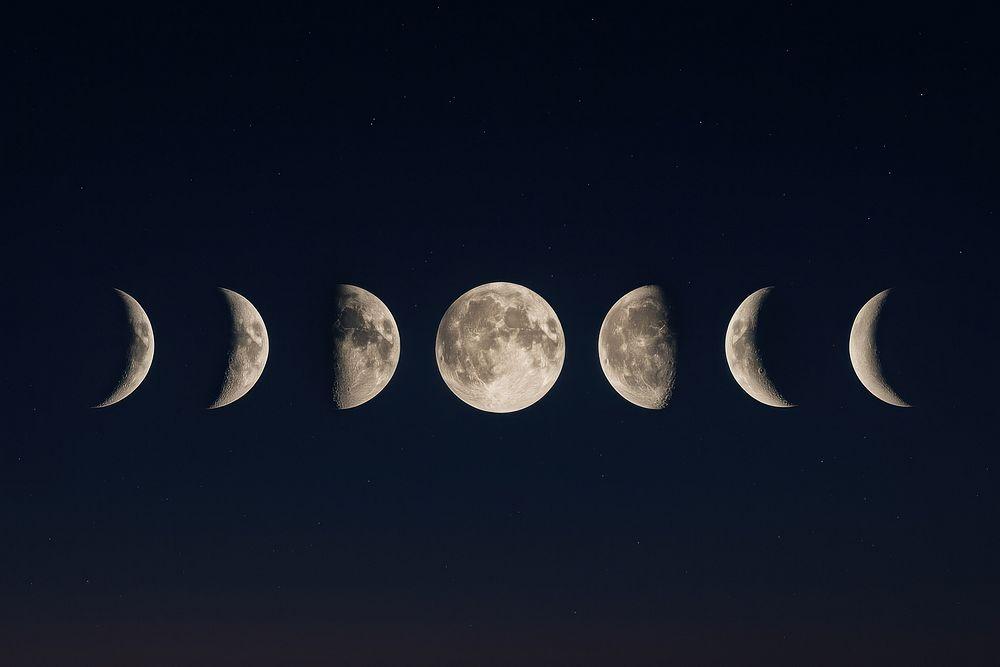
There is something quietly reassuring about looking up and finding the Moon in a different shape than the night before.
Sometimes it is a thin crescent, barely visible above the horizon. Sometimes it appears as a bright, familiar circle. And sometimes we look for it and find only darkness.
The Moon is always there, even when we cannot see it.
For centuries, people have watched its changing appearance to mark time, shape calendars, and find meaning in the natural world. Today, following the lunar cycle can also become a gentle way to notice the passing of our own days.
We do not need to believe that the Moon controls our emotions or determines what happens in our lives to find value in its rhythm.
We can simply observe what is happening in the sky and allow that changing light to inspire a little reflection.
Here is a beginner-friendly guide to the eight Moon phases, what causes them, and the symbolic meanings often associated with each one.
Understanding the Lunar Cycle
The Moon does not produce its own light. What we see is sunlight reflected from its surface.
As the Moon travels around Earth, the angle between the Sun, Earth, and Moon changes. From our perspective, different portions of the Moon's sunlit half become visible.
These changing appearances are called lunar phases.
A complete cycle, from one New Moon to the next, takes approximately 29.5 days.
Although the Moon changes continuously, we commonly describe its journey through eight named phases.
What Is the Difference Between Waxing and Waning?
Two words appear frequently when learning about Moon phases:
Waxing means the illuminated portion we see is increasing.
Waning means the illuminated portion we see is decreasing.
The Moon waxes between the New Moon and Full Moon, then wanes between the Full Moon and the next New Moon.
The phases also look different depending on where we observe them. For example, the illuminated side of a waxing crescent generally appears on the right in the Northern Hemisphere and on the left in the Southern Hemisphere.
The cycle itself, however, follows the same sequence everywhere.
The 8 Moon Phases in Order
The lunar cycle is a continuous movement, not eight separate events.
Still, giving names to its changing appearances can help us recognize where we are in the cycle.
Each phase has an astronomical description. It may also carry symbolic meaning in contemporary spiritual and reflective practices.
These interpretations are invitations rather than rules. They are not scientific claims about how the Moon affects our inner lives.
1. New Moon — Beginnings and Intention
What happens in the sky: During the New Moon, the Moon is positioned approximately between Earth and the Sun. Its illuminated half faces mostly away from us, making it ordinarily invisible in the night sky.
The New Moon marks the beginning of a new lunar cycle.
Symbolic meaning: Beginnings, possibility, stillness, and intention.
Because the Moon is hidden from view, this phase is often associated with the quiet moments before something takes shape.
Not every beginning needs to arrive with certainty or a carefully made plan.
Sometimes it begins with noticing what matters.
A moment to reflect: What would I like to make a little more room for in the weeks ahead?
2. Waxing Crescent — Hope and Early Growth
What happens in the sky: A thin curve of illuminated Moon becomes visible after the New Moon. The bright portion gradually increases each day.
Symbolic meaning: Hope, curiosity, early movement, and possibility.
The Waxing Crescent can remind us that growth is not always immediately impressive.
A new idea may still feel uncertain. A change may be too small for anyone else to notice.
Yet something has begun.
There is beauty in allowing it to remain small for a while.
A moment to reflect: What small beginning in my life deserves patience rather than pressure?
3. First Quarter — Movement and Adjustment
What happens in the sky: At First Quarter, approximately half of the Moon's visible face is illuminated. The Moon has completed about one quarter of its cycle.
Despite its name, the Moon does not appear as a quarter-circle. It looks half-lit.
Symbolic meaning: Movement, decisions, adjustment, and finding direction.
The First Quarter is often associated with the point where an intention begins to meet everyday reality.
Something may be working differently than expected. A plan may need to change.
That does not necessarily mean the beginning was wrong.
Adjustment is part of moving forward.
A moment to reflect: What is still worth continuing, and what might need a different approach?
4. Waxing Gibbous — Patience and Becoming
What happens in the sky: More than half of the Moon's visible face is illuminated, and the bright portion continues growing toward the Full Moon.
The word gibbous describes its rounded, almost-full appearance.
Symbolic meaning: Patience, refinement, preparation, and gradual growth.
There is a particular kind of beauty in things that are not quite finished.
A garden before its flowers open. A thought still finding its words. A project that needs another quiet afternoon.
The Waxing Gibbous can become a reminder that becoming takes time.
We do not have to rush toward completion simply because we can imagine it.
A moment to reflect: What am I still allowing to develop?
5. Full Moon — Awareness and Gratitude
What happens in the sky: At the Full Moon, Earth is approximately between the Sun and Moon. The Moon's visible face appears fully illuminated.
It rises around sunset and is often visible throughout the night, weather and local conditions permitting.
Symbolic meaning: Awareness, fullness, gratitude, and recognition.
The Full Moon is perhaps the most familiar and celebrated phase.
In many contemporary spiritual practices, it is associated with illumination — a symbolic opportunity to see something more clearly.
But clarity does not always mean reaching a conclusion.
Sometimes it means recognizing what has changed, what has grown, or what has been present all along.
The Full Moon can also offer a moment of gratitude, without requiring us to pretend that everything is complete or perfect.
A moment to reflect: What can I see or appreciate now that I may have overlooked before?
6. Waning Gibbous — Appreciation and Integration
What happens in the sky: After the Full Moon, the illuminated portion begins to decrease. More than half of the Moon's visible face remains bright.
Symbolic meaning: Appreciation, understanding, sharing, and integration.
After a moment of fullness, there is often a quieter period of understanding what it meant.
We may begin to recognize the significance of an experience only after it has passed.
The Waning Gibbous can invite us to consider what we have learned, received, or discovered along the way.
Not every experience needs to become a lesson.
Some are simply worth remembering.
A moment to reflect: What from this cycle would I like to remember or carry with me?
7. Last Quarter — Discernment and Making Space
What happens in the sky: At Last Quarter, also called Third Quarter, approximately half of the Moon's visible face is illuminated again. The bright portion continues decreasing.
The Moon has completed about three quarters of its cycle.
Symbolic meaning: Discernment, reassessment, release, and making space.
The Last Quarter can represent a moment to consider what still deserves our attention.
Perhaps something that mattered earlier in the month no longer needs quite so much of our energy.
Perhaps an expectation has become heavier than it needs to be.
Making space does not always mean letting something go entirely.
Sometimes it means allowing it to become smaller.
A moment to reflect: What no longer needs the same amount of attention from me?
8. Waning Crescent — Rest and Return
What happens in the sky: Only a thin crescent remains illuminated as the Moon approaches the next New Moon.
The visible crescent becomes smaller until the cycle begins again.
Symbolic meaning: Rest, quiet, reflection, and renewal.
The Waning Crescent is the final visible phase before the New Moon.
Its diminishing light can offer a gentle reminder that not every moment is meant for growth, movement, or decision-making.
There is also value in resting, waiting, and allowing things to settle.
The cycle is coming to an end, but nothing needs to be hurried into a new beginning.
A moment to reflect: Where might I allow myself a little more quiet?
Moon Phases at a Glance
Moon phase | Symbolic theme |
|---|---|
New Moon | Beginnings and intention |
Waxing Crescent | Hope and early growth |
First Quarter | Movement and adjustment |
Waxing Gibbous | Patience and becoming |
Full Moon | Awareness and gratitude |
Waning Gibbous | Appreciation and integration |
Last Quarter | Discernment and making space |
Waning Crescent | Rest and return |
These meanings are not fixed definitions shared by every culture or spiritual tradition. They are a contemporary reflective framework inspired by the Moon's changing appearance.
You may find that some phases speak to you more than others. You may also experience a month that does not resemble this symbolic progression at all.
That is perfectly natural.
The Moon follows its astronomical cycle. Our lives follow more complicated paths.
How to Begin Following the Moon
You do not need to memorize all eight phases or turn every evening into a ritual.
Start by looking up.
Notice whether the Moon appears as a crescent, a half-lit shape, or a bright circle. Observe where it is in the sky, and how its appearance changes over several evenings.
If you cannot see it, you can check a lunar calendar or Moon phase app.
You might keep a few notes about what you notice, both outdoors and in your own life.
But there is no requirement to record every phase.
One of the gentlest ways to follow the lunar cycle is to recognize that it continues whether we are paying attention or not.
We can return whenever we wish.
Eight Phases to Notice, Four Moments to Pause
Although we commonly name eight Moon phases, four are especially useful as recognizable milestones:
New Moon, First Quarter, Full Moon, and Last Quarter.
Astronomically, these are the four principal lunar phases. The other four names describe the intermediate appearances between them.
For a reflective practice, we can use these principal phases as occasional opportunities to pause.
The New Moon might invite us to consider a beginning. The First Quarter, an adjustment. The Full Moon, something worth noticing. The Last Quarter, a little more space.
This is only one way of working with lunar symbolism.
It can be meaningful without becoming a schedule we feel obliged to follow.
The Moon Will Begin Again
There is no perfect way to follow the Moon.
Some months, we may notice every change in its shape. Other times, we may look up after several cloudy evenings and discover that the crescent has already become almost full.
Nothing has been missed that needs to be recovered.
The Moon will continue its journey, moving from darkness toward brightness and back again.
Perhaps that is part of its quiet appeal.
It offers us a rhythm we can return to, without asking us to keep pace.
And when we begin paying attention, even occasionally, the familiar night sky can start to feel a little more extraordinary.
A Gentle Companion for the Lunar Cycle
If you would like a little more space to explore these reflections, ☞ The Lunar Companion is our 21-page printable guide to following the Moon at your own pace.
It brings together the eight lunar phases, four guided rituals at the principal milestones, and thoughtful pages for journaling and reflection.
There is no daily calendar to complete and nothing to catch up on — just a quiet place to return to whenever the Moon reminds you to pause.
Grow slowly.
— Soulseed
Move with intention. Follow the cycles.
Seasonal reflections, gentle rituals, and inspiration for intentional living.
Plus 10% off your first purchase.