The 12 Full Moon Names Explained
Discover the meaning and origins behind the 12 full moon names — from the Wolf Moon to the Cold Moon — and explore how these ancient lunar traditions can inspire reflection, rhythm, and intentional living today.

The Wolf Moon.
The Snow Moon.
The Flower Moon.
For centuries, each full moon has carried a name rooted in nature, seasonal rhythms, and ancient traditions.
Long before modern calendars, people looked to the moon to track time, mark seasonal changes, and understand the world around them. Each moon name reflected what was happening in nature during that time of year — from deep winter snow to spring flowers in bloom.
Today, these moon names continue to hold meaning.
Not only as reminders of seasonal cycles, but also as gentle invitations to slow down, reflect, and reconnect with ourselves.
In this guide, we’ll explore the meaning and origins behind the 12 full moon names — from the Wolf Moon to the Cold Moon.
In This Article
Why Do Full Moons Have Names?
The 12 Full Moon Names Explained
Why People Still Connect With Moon Names Today
Explore the Meaning Behind Every Full Moon
Why Do Full Moons Have Names?
The tradition of naming full moons dates back centuries and is often linked to Indigenous North American, Celtic, Anglo-Saxon, and agricultural traditions.
Before modern calendars became widespread, people relied on the moon and the seasons to guide daily life. Naming each full moon made it easier to track the passing of time and seasonal shifts throughout the year.
These names were often inspired by:
weather patterns
animal behavior
harvest cycles
seasonal changes in nature
While the exact origins vary, many of the moon names commonly used today were popularized through sources like The Old Farmer’s Almanac.
More than anything, these names remind us that humans once lived much more closely connected to the rhythms of the natural world.
The 12 Full Moon Names Explained
January — Wolf Moon
The Wolf Moon is named after the wolves often heard howling during the deep winter nights.
It represents instinct, inner guidance, and reflection during a season of stillness.
February — Snow Moon
The Snow Moon reflects the heavy snowfall that often arrives during February.
This moon is associated with rest, quiet, and moving more gently through the season.
March — Worm Moon
The Worm Moon marks the transition from winter to spring, when the ground begins to soften and life slowly returns.
It symbolizes renewal, growth, and new beginnings.
April — Pink Moon
Named after the pink wildflowers that bloom in early spring, the Pink Moon carries the energy of openness, creativity, and possibility.
May — Flower Moon
The Flower Moon reflects the abundance of spring in full bloom.
It is often associated with growth, beauty, expansion, and self-expression.
June — Strawberry Moon
The Strawberry Moon takes its name from the strawberry harvest season.
This moon represents sweetness, gratitude, and appreciating what has begun to grow.
July — Buck Moon
The Buck Moon is named after the time when deer begin regrowing their antlers.
It symbolizes strength, resilience, and steady personal growth.
August — Sturgeon Moon
Named after the large fish traditionally caught during this season, the Sturgeon Moon reflects depth, wisdom, and quiet abundance.
September — Harvest Moon
The Harvest Moon is linked to the autumn harvest season, when crops were gathered before winter.
It represents gratitude, reflection, and recognizing what has taken shape in our lives.
October — Hunter’s Moon
The Hunter’s Moon follows the Harvest Moon and marks a season of preparation.
It is often associated with clarity, focus, and intentional choices.
November — Beaver Moon
The Beaver Moon takes its name from the season when beavers prepare for winter by building shelters and gathering resources.
This moon reflects protection, grounding, and turning inward.
December — Cold Moon
The Cold Moon marks the longest nights and the deep stillness of winter.
It symbolizes rest, release, and the quiet ending of a cycle before a new one begins.
🌙 Free Download
Keep every moon phase at hand with the 2026 Lunar Calendar.
Download it free → https://short-url.cc/free-2026-moon-phase-calendar
Why People Still Connect With Moon Names Today
Even today, many people continue to feel drawn to the moon and its changing cycles.
For some, moon names offer a simple way to reconnect with nature and seasonal rhythms. For others, they become gentle moments of reflection — small reminders to pause, slow down, and move through life with more awareness.
You don’t need an elaborate spiritual practice to connect with the moon.
Sometimes, simply noticing the cycle is enough.
A moment of reflection.
A quiet ritual.
A reminder to return to yourself.
Explore the Meaning Behind Every Full Moon
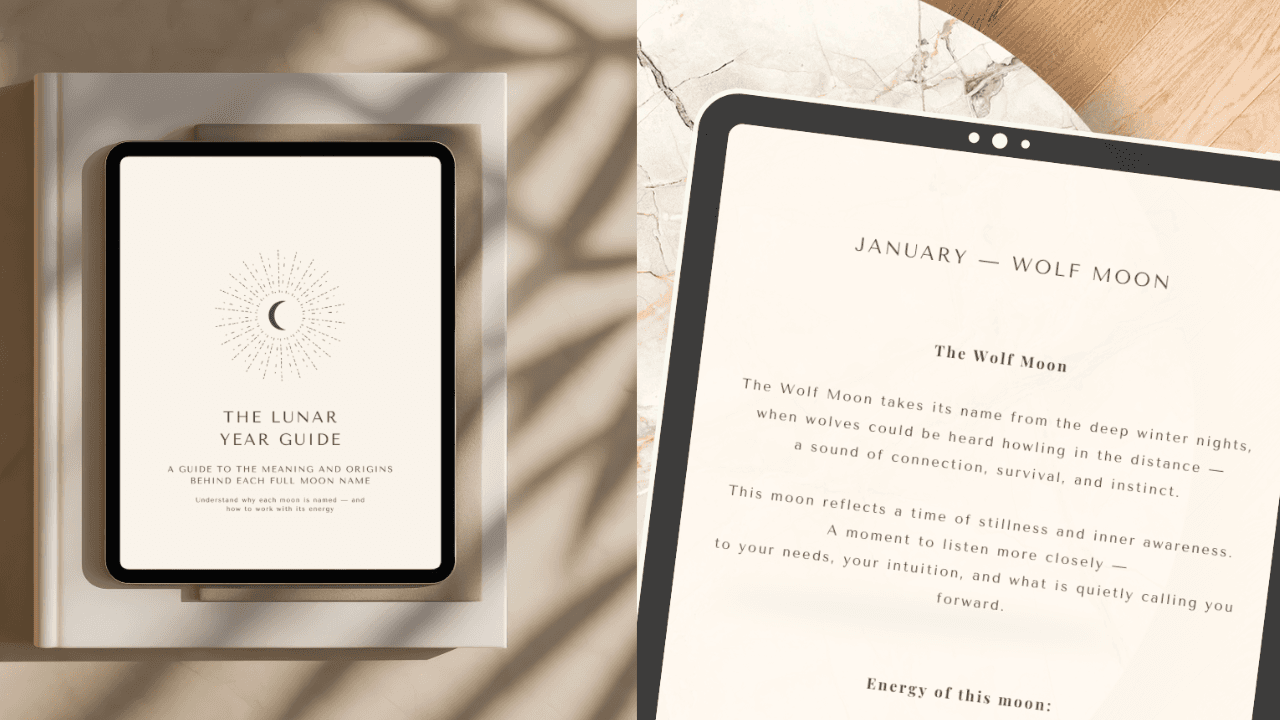
If you’d like to explore each moon more deeply, The Lunar Year Guide offers a simple and beautifully designed way to reconnect with the rhythm of the year.
Inside the guide, you’ll find:
the meaning and origins behind each full moon name
monthly reflection prompts
gentle rituals
a 2026 moon phase calendar
guidance designed for beginners and intentional living
→ Explore The Lunar Year Guide here:
https://soulseed.gumroad.com/l/lunar-year-guide
Move with intention. Follow the cycles.
Seasonal reflections, gentle rituals, and inspiration for intentional living.
Plus 10% off your first purchase.